
What is ergonomic office furniture?
Ergonomic office furniture aims to fit the environment of the office to the employee and not vice versa which has happened all too frequently in the past. Technological advancements no longer mean that desks need to be static, or that height adjustable desks need to be lifted and lowered with heavy manual labour.
But what is ergonomic office furniture and how does it affect my business?
Poor ergonomics can affect all aspects of business including health, safety, production, quality, and human relations. Ergonomic office furniture encompasses many components, but the main 2 are:

What is ergonomic office furniture – Electric height adjustable desks
Electric height adjustable desks allow the user at the touch of a button to quickly and efficiently adjust the height of their desk. Human beings were not meant to be sat down for long periods of time. We were designed to be on the move, so modern office environments which encourage long periods of sitting have led to poor posture and weak lower backs. However, the opposite is also true, long periods of standing also lead to lower back pain and sore feet. Studies have shown that a sit – stand approach alleviates the load on the lower back, increases employee productivity and reduces costs associated with OHS and work related injuries. Simply put, when people feel god, they can work as efficiently and productively as possible.
Using an electric height adjustable desk means that an employee can achieve this sit-stand approach quickly and is the forefront of ergonomic office furniture. Ergonomic office furniture in the form of electric height adjustable desks also allows companies to create hot desking areas, or one desk can be safely used by multiple employees who can adjust it to a comfortable sitting position.
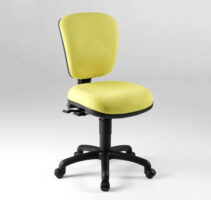
What is ergonomic office furniture – Ergonomic office chairs
Ergonomic office chairs help provide support for the lower back. Unfortunately long hours sitting in the same position is often unavoidable. Providing ergonomic office furniture in the form of ergonomic office chairs will also help companies save money by avoiding costly worker related injuries and compensation.
Ergomotion has been dealing with the question of what is ergonomic office furniture for decades and has a large range of high quality, Australian made and designed ergonomic office furniture to suit any project requirement.

Application of ergonomic office furniture principles can result in:
- Increased productivity – Decreased lost time at work
- Increased quality
- Decreased absenteeism
- Improved employee retention, thus reducing training costs
- Improved health and safety
- Increased job satisfaction and morale
- Decreased injuries and workers compensation claims
View our range ergonomic office furniture below, or contact Ergomotion today to discuss your ergonomic office requirements.
The benefits of ergonomic office furniture greatly outweigh the initial cost of installing ergonomic furniture, like electric height adjustable desks. Lower back pain is second only to upper respiratory infections as a leading cause of absence from work. In studies, productivity increases have ranged from 5% to 50%, and in today’s competitive market ergonomics can play a vital role in giving your company the edge.
Work related injury costs
Musculoskeletal disorders cost the nation (USA) up to $50 billion a year. Employers pay between $15-$18 billion in workers’ compensation costs alone. Being proactive, rather than reactive to any potential claims can significantly reduce your companies costs in the long run.
Benefits of ergonomic office furniture principles can result in:
- Increased productivity
- Decreased lost time at work
- Increased quality
- Decreased absenteeism
- Improved employee retention, thus reducing training costs
- Improved health and safety
- Increased job satisfaction and morale